Sources:
1. "To Tom, Who Lived It": John Steinbeck and the Man from Weedpatch
Jackson J. Benson and John Steinbeck
Journal of Modern Literature, Vol. 5, No. 2 (Apr., 1976), pp. 151-210
Published by: Indiana University Press
http://www.jstor.org/stable/view/3830940?seq=4&Search=yes&term=grapes&term=wrath&term=john&term=steinbeck&list=hide&searchUri=%2Faction%2FdoBasicSearch%3FQuery%3Dthe%2Bgrapes%2Bof%2Bwrath%2Bjohn%2Bsteinbeck%26gw%3Djtx%26prq%3Dthe%2Bgrapes%2Bof%2Bwrath%2Bjohn%2Bsteinback%26Search%3DSearch%26hp%3D25&item=18&ttl=868&returnArticleService=showArticle
2.The Grapes of Wrath as Fiction
Peter Lisca
PMLA, Vol. 72, No. 1 (Mar., 1957), pp. 296-309
Published by: Modern Language Association
http://www.jstor.org/action/showArticle?doi=10.2307/460231&Search=yes&term=grapes&term=wrath&term=john&term=steinbeck&item=4&returnArticleService=showArticle&ttl=868&searchUri=%2Faction%2FdoBasicResults%3Fhp%3D25%26la%3D%26gw%3Djtx%26jcpsi%3D1%26artsi%3D1%26Query%3Dthe%2Bgrapes%2Bof%2Bwrath%2Bjohn%2Bsteinbeck%26sbq%3Dthe%2Bgrapes%2Bof%2Bwrath%2Bjohn%2Bsteinbeck%26prq%3Dthe%2Bgrapes%2Bof%2Bwrath%2Bjohn%2Bsteinback%26si%3D1%26jtxsi%3D1
3.The Grapes of Wrath (1940): Thematic Emphasis Through Visual Style
Vivian C. Sobchack
American Quarterly, Vol. 31, No. 5, Special Issue: Film and American Studies (Winter, 1979), pp. 596-615
Published by: The Johns Hopkins University Press
http://www.jstor.org/action/showArticle?doi=10.2307/2712428&Search=yes&term=grapes&term=wrath&term=john&term=steinbeck&item=13&returnArticleService=showArticle&ttl=868&searchUri=%2Faction%2FdoBasicResults%3Fhp%3D25%26la%3D%26gw%3Djtx%26jcpsi%3D1%26artsi%3D1%26Query%3Dthe%2Bgrapes%2Bof%2Bwrath%2Bjohn%2Bsteinbeck%26sbq%3Dthe%2Bgrapes%2Bof%2Bwrath%2Bjohn%2Bsteinbeck%26prq%3Dthe%2Bgrapes%2Bof%2Bwrath%2Bjohn%2Bsteinback%26si%3D1%26jtxsi%3D1
Friday, April 25, 2008

Wednesday, April 16, 2008
"Her Kind" by Anne Sexton
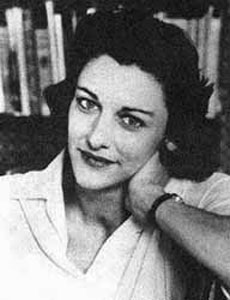
After reading Anne Sexton's "Her Kind" I immediately realized something: I had no idea what I had just read. So of course, being the diligent student I am, I re-read it enough times to make at least some sense of it. As I read the lines over and over again, it became clear that Sexton (who I am quite sure is the speaker) had severe mental problems. I don't mean that as a joke, I really do mean that there was something wrong with her. "Her Kind" is a poem that is dripping with sadness, regret, and depression. The speaker is truly suffering, so as the readers, we should open our eyes to her pain.
Sexton's reason for using words such as "possessed," "haunting," and "out of mind" in the first line is because the speaker has been taken over by her mental state. She has thought of doing "evil" to others because she suffers from a lack of appreciation. Important to the understanding of the poem is Sexton's own life. Sexton suffered from bipolar disorder for the last twenty years of her life. After much psychotherapy, she still believed that her existence was meaningless, and that her future was hopeless. Although I do not believe Sexton's poem is an autobiography, I do believe knowing this key fact makes it easier to understand the meaning of this complicated (and even at some times, ambiguous) poem.
Sexton's underlying tone is very feminist. By calling herself a "possessed witch" she is providing social commentary on the hardships women have had to face. From the dawn of time, women have been labeled as evil and crafty. For that very reason, Sexton comments on the role of women. She speaks about "fix[ing] supper for the worms and the elves," and how they "whine." These lines show that while she has fed and provided for her ungrateful family, she continues to earn no respect from them. In this stanza, she is playing the role of an unnoticed mother. While Sexton's poem is very specific to her own hardships, she is making a statement that many women can relate to.
The third and final stanza of the poem has a slightly different tone. Sexton addresses this "driver" directly and is almost testing his limits. She calls herself a "survivor." She has taken on all the miseries of life, she has suffered countless times (both because of her own mental state and because of others), and she is finally ready for it all to be over. Because she has experienced all these hardships, she believes that death is now a viable option. She does not believe that taking her own life would be sinful--she is "not ashamed to die." Again, knowing a bit about Sexton's life is helpful. Although the last few lines can easily be interpreted as embracing death (and perhaps suicide), it is even easier to understand Sexton's welcoming of death when one discovers that her own death took place when she committed suicide by locking herself in her car and poisoning herself with carbon monoxide at the young age of forty five.
Sexton's melancholy poem can be interpreted in many ways. However, regardless of who the reader is, we can all agree that her poem is sad, and that the speaker is searching for an escape.
Discussion Questions:
1. What do you believe has driven the speaker to insanity?
2. Do you read this poem as a confession? If not, why is the speaker admitting to having such twisted thoughts?
3. At the end of the poem, does the speaker seem to have given up? (i.e., what is her reason for accepting death?)
4. Who is the "driver" and why does she address this individual in the last stanza?
(626).
Saturday, April 12, 2008
The Depression Caused by the Great Depression
My first impression of John Steinbeck's The Grapes of Wrath is that Steinbeck is attempting to portray a society that no longer has anything to live for. Once I began reading, the nature of the novel depressed me. Descriptions of the roads, the houses, and the people were all overshadowed by one thing: loneliness. The dusty, empty roads seemed relatively irrelevant to me. But then I realized something: this particular novel was on Mr. Martin's dreaded ID Paper Book List. Thus, I concluded that this novel was a portrayal of something greater than what it seemed. Then it became obvious to me. This novel was intended to be depressing--it was a portrayal of the Great Depression.
Tom Joad, an ex-convict, has just been released from prison after having been locked up for four years for having "killed a guy" (13). Little does he know how much things have changed since. On his journey home, his encounter with the truck driver is meant to foreshadow the hopelessness of the situation. The truck driver lives a monotonous life. He drives his truck day after day only to hear stories of more families falling apart. Which is why he expresses his concern to Tom Joad when Joad tells him of his family farm. The trucker tells Joad of the many farms and fields that have been destroyed by the infamous Dust Bowl. Joad begins to feel disillusioned. He almost denies that anything would happen to his family's farm that was built on hard work and sweat.
Joad then encounters Jim Casy, a preacher he once knew in his youth. Casy's complete reversal of character is just another indication of how much things have changed since Joad's imprisonment. Steinbeck puts these two characters in the beginning of the novel to make two distinct points. His introduction of the novel with a complete stranger to Joad is simply there to throw Joad off. He is returning to his seemingly perfect life when someone who he has completely no relation to tells him that everything has changed. For this very reason, Joad does not pay attention to the trucker's warnings.
However, when he is reconnected with Casy, a childhood figure, he realizes that the warnings of the trucker must have had some validity. Joad then begins to understand the magnitude of what has happened since he has been away. Casy is somewhat of a wake-up call. Things aren't as perfect as he once imagined.
While I have not gotten extremely far in the novel, I have read enough to understand the point Steinbeck is trying to make about the Great Depression. Steinbeck is attempting to show the extent to which this event in history affected the lives of millions of people. As I read more, I will be able to prove that point better (469).
Tom Joad, an ex-convict, has just been released from prison after having been locked up for four years for having "killed a guy" (13). Little does he know how much things have changed since. On his journey home, his encounter with the truck driver is meant to foreshadow the hopelessness of the situation. The truck driver lives a monotonous life. He drives his truck day after day only to hear stories of more families falling apart. Which is why he expresses his concern to Tom Joad when Joad tells him of his family farm. The trucker tells Joad of the many farms and fields that have been destroyed by the infamous Dust Bowl. Joad begins to feel disillusioned. He almost denies that anything would happen to his family's farm that was built on hard work and sweat.
Joad then encounters Jim Casy, a preacher he once knew in his youth. Casy's complete reversal of character is just another indication of how much things have changed since Joad's imprisonment. Steinbeck puts these two characters in the beginning of the novel to make two distinct points. His introduction of the novel with a complete stranger to Joad is simply there to throw Joad off. He is returning to his seemingly perfect life when someone who he has completely no relation to tells him that everything has changed. For this very reason, Joad does not pay attention to the trucker's warnings.
However, when he is reconnected with Casy, a childhood figure, he realizes that the warnings of the trucker must have had some validity. Joad then begins to understand the magnitude of what has happened since he has been away. Casy is somewhat of a wake-up call. Things aren't as perfect as he once imagined.
While I have not gotten extremely far in the novel, I have read enough to understand the point Steinbeck is trying to make about the Great Depression. Steinbeck is attempting to show the extent to which this event in history affected the lives of millions of people. As I read more, I will be able to prove that point better (469).
Wednesday, March 12, 2008
Stuck in the Past
When confronted by a hurdle that is new to you, what are your first thoughts? Naturally, the first thing we do is try to search for precedents. It is in human nature to fear change and to be comforted by those experiences of the past that we know and love. In August Wilson's play Fences, the protagonist, Troy, oftentimes finds himself in situations where he can think of one thing and one thing only--the past. He is caught in this time warp that causes him to be lost in thoughts of his unfulfilled baseball career, his victorious battle with Death, and his long-gone dog, Blue. However, Troy's obsession with the past becomes more of a hindrance than a blessing. Because he refuses to admit that times are changing, Troy causes conflict with the people he loves most.
Though Troy is clearly too old to be playing ball, he continues to use baseball metaphors in his everyday life. He speaks to Rose, his wife, about death being "but a fastball" (2002) and that he "kiss[ed] it goodbye" (2003). However, the baseball metaphors are not the problem--it is the mindset these metaphors put him in. His past baseball career reminds him of how difficult things were for African Americans. For that very reason, he is unable to let his son, Cory, pursue a career in athletics. When Rose tries to convince Troy that "times have changed," (2002), he quickly switches to the defensive.
Slowly, Cory begins to feel that his father is worried that Cory may surpass him in skill. Cory's ultimate rebellion is caused by Troy's controlling nature. Though Troy may not have been a great father, he held the family together and provided for them for eighteen years. Though Cory can't see it, Troy is merely trying to protect him from the harsh realities that he will face once he leaves the comfort of a sheltered life. When Cory quits his job at the A & P, Troy is simply concerned that his son will not have any stability in his life. Similarly, the final brawl between Troy and Cory is caused by Troy's desire to look out for his son.
Cory ultimately cannot strike the bat at his father. After he swings twice, he is far too afraid to swing for the third time because either way, he strikes out. If he hits his father, his life is over. If he misses, he is just bad at batting. When Cory is told to pick up his belongings on the "other side of the fence" (2041), he is being disowned from his family. The fence represents safety and togetherness. Cory finally redeems himself once he re enters his father's life by attending his funeral (450).
Though Troy is clearly too old to be playing ball, he continues to use baseball metaphors in his everyday life. He speaks to Rose, his wife, about death being "but a fastball" (2002) and that he "kiss[ed] it goodbye" (2003). However, the baseball metaphors are not the problem--it is the mindset these metaphors put him in. His past baseball career reminds him of how difficult things were for African Americans. For that very reason, he is unable to let his son, Cory, pursue a career in athletics. When Rose tries to convince Troy that "times have changed," (2002), he quickly switches to the defensive.
Slowly, Cory begins to feel that his father is worried that Cory may surpass him in skill. Cory's ultimate rebellion is caused by Troy's controlling nature. Though Troy may not have been a great father, he held the family together and provided for them for eighteen years. Though Cory can't see it, Troy is merely trying to protect him from the harsh realities that he will face once he leaves the comfort of a sheltered life. When Cory quits his job at the A & P, Troy is simply concerned that his son will not have any stability in his life. Similarly, the final brawl between Troy and Cory is caused by Troy's desire to look out for his son.
Cory ultimately cannot strike the bat at his father. After he swings twice, he is far too afraid to swing for the third time because either way, he strikes out. If he hits his father, his life is over. If he misses, he is just bad at batting. When Cory is told to pick up his belongings on the "other side of the fence" (2041), he is being disowned from his family. The fence represents safety and togetherness. Cory finally redeems himself once he re enters his father's life by attending his funeral (450).
Thursday, February 21, 2008
Mother and Son

The Tragedy of Hamlet, Prince of Denmark
Shakespeare homepage | Hamlet | Act 3, Scene 4
Previous scene | Next scene
SCENE IV. The Queen's closet.
Enter QUEEN GERTRUDE and POLONIUS
LORD POLONIUS
He will come straight. Look you lay home to him:
Tell him his pranks have been too broad to bear with, (**Polonius shakes his finger at Gertrude.*)
And that your grace (**He softens his tone as he bows.**) hath screen'd and stood between
Much heat and him. I'll sconce me even here.
Pray you, be round with him.
** He is unmistakenly annoyed with Hamlet. He has finally begun to catch on--Hamlet is NOT crazy. That boy knows what he is doing.**
HAMLET
[Within] Mother, mother, mother!
QUEEN GERTRUDE
I'll warrant you,
Fear me not: withdraw, (**Gertrude points at a place for Polonius to hide.**) I hear him coming.
POLONIUS hides behind the arras
Enter HAMLET
HAMLET
Now, mother, what's the matter?
**Hamlet says this with a smirk--he is being a smartass (sorry for the language!)**
QUEEN GERTRUDE
Hamlet, thou hast thy father much offended.
**Gertrude has a very stern look on her face.**
HAMLET
Mother, you have my father much offended.
**Hamlet says this with an attitude!**
QUEEN GERTRUDE
Come, come, you answer with an idle tongue.
**She becomes more flustered.**
HAMLET
Go, go, you question with a wicked tongue.
QUEEN GERTRUDE
Why, how now, Hamlet!
**Gertrude starts sobbing.**
HAMLET
What's the matter now?
**Hamlet says this line with sarcasm and a roll of his eyes.**
QUEEN GERTRUDE
Have you forgot me?
**She puts her hand on his shoulder.**
HAMLET
No, by the rood, not so:
You are the queen, your husband's brother's wife; (**Gertrude shifts uncomfortably at this statement.**)
And--would it were not so!--you are my mother.
QUEEN GERTRUDE
Nay, then, I'll set those to you that can speak.
*She can't speak because of all the tears.**
HAMLET
Come, come, and sit you down; you shall not budge;
You go not till I set you up a glass
Where you may see the inmost part of you.
**Hamlet gets closer to his mother as she backs into a corner. He has an evil look on his face.**
QUEEN GERTRUDE
What wilt thou do? thou wilt not murder me?
Help, help, ho!
**At this point, Hamlet is now leaning over his mother as if about to attack her. She is screaming and trying to push him away.**
LORD POLONIUS
[Behind] What, ho! help, help, help!
**Polonius blows his cover.**
HAMLET
[Drawing] How now! a rat? Dead, for a ducat, dead!
Makes a pass through the arras
LORD POLONIUS
[Behind] O, I am slain!
Falls and dies
QUEEN GERTRUDE
O me, what hast thou done?
**Gertrude is completely shocked. She holds her hand to her chest.**
HAMLET
Nay, I know not:
Is it the king?
**Hamlet says this as he lowers his sword down and wipes his face with his arm. He is sweaty and disheveled. **
QUEEN GERTRUDE
O, what a rash and bloody deed is this!
*She kneels on the floor, crying.*
HAMLET
A bloody deed! (*Hamlet screams this and throws his sword (so it makes a loud noise.))* almost as bad, good mother,
As kill a king, and marry with his brother.
*He once again is coming closer to her.*
QUEEN GERTRUDE
As kill a king!
*Hamlet is leaning over his mother with his arm on her shoulder. She literally whispers this line.*
HAMLET
Ay, lady, 'twas my word.
*Hamlet deeply gazes into her eyes in order for her to soak in what has just been said.*
Lifts up the array and discovers POLONIUS
Thou wretched, rash, intruding fool, farewell! (*Hamlet is crouching down over the body and directly speaking to the dead Polonius.*)
I took thee for thy better: take thy fortune; (*Hamlet throws a coin on the dead man's chest.*)
Thou find'st to be too busy is some danger.
Leave wringing of your hands: peace! sit you down, (*Hamlet stands up and aggressively points at Gertrude.*)
And let me wring your heart; for so I shall,
If it be made of penetrable stuff,
If damned custom have not brass'd it so
That it is proof and bulwark against sense.
QUEEN GERTRUDE
What have I done, that thou darest wag thy tongue
In noise so rude against me?
*She doesn't listen to Hamlet. Instead of sitting still, she finally has enough courage to stand up and address him. For some reason, Gertrude is still unable to understand the root of Hamlet's anger.*
HAMLET
Such an act
That blurs the grace and blush of modesty, (*Hamlet begins pacing the room.*)
Calls virtue hypocrite, takes off the rose
From the fair forehead of an innocent love
And sets a blister there, makes marriage-vows (*He is once again near Gertrude. He comes up behind her and is whispering these lines in her ear.*)
As false as dicers' oaths: O, such a deed
As from the body of contraction plucks (*He grips her tighter.*)
The very soul, and sweet religion makes
A rhapsody of words: heaven's face doth glow:
Yea, this solidity and compound mass,
With tristful visage, as against the doom,
Is thought-sick at the act.
**Hamlet looks absolutely evil. He is still angry by his mother's sinful deed, but even more angry at her ignorance.**
QUEEN GERTRUDE
Ay me, what act,
That roars so loud, and thunders in the index?
*Gertrude struggles to say this line. She is afraid that she knows what deed Hamlet is talking about, and his tight grasp is scaring her.*
HAMLET
Look here, upon this picture, and on this, (*Hamlet lets go and starts walking towards the painting.*)
The counterfeit presentment of two brothers.
See, what a grace was seated on this brow;
Hyperion's curls; the front of Jove himself; (*He is tracing the picture of his father with his hands with a sense of longing.*)
An eye like Mars, to threaten and command;
A station like the herald Mercury
New-lighted on a heaven-kissing hill;
A combination and a form indeed,
Where every god did seem to set his seal,
To give the world assurance of a man: (*Hamlet suddenly comes out of this reverie about his father.*)
This was your husband. (*He grabs her face to make her look at the picture and says this line very sternly.*) Look you now, what follows:
Here is your husband (*He emphasizes the word "here.*) ; like a mildew'd ear,
Blasting his wholesome brother. Have you eyes?
Could you on this fair mountain leave to feed, (*He raises his voice.*)
And batten on this moor? Ha! have you eyes?
You cannot call it love; (*Hamlet lets go of her face and pauses briefly. He then lowers his voice.*) for at your age
The hey-day in the blood is tame, it's humble,
And waits upon the judgment: and what judgment (**Hamlet once again raises his voice.**)
Would step from this to this? Sense, sure, you have,
Else could you not have motion; but sure, that sense
Is apoplex'd; for madness would not err,
Nor sense to ecstasy was ne'er so thrall'd
But it reserved some quantity of choice,
To serve in such a difference. What devil was't
That thus hath cozen'd you at hoodman-blind?
Eyes without feeling, feeling without sight,
Ears without hands or eyes, smelling sans all,
Or but a sickly part of one true sense
Could not so mope.
O shame! (**He pauses briefly.**) where is thy blush? (**He is now squinting as he looks upon Gertrude's face. He looks at her as though he is studying a painting.**) Rebellious hell,
If thou canst mutine in a matron's bones,
To flaming youth let virtue be as wax,
And melt in her own fire: proclaim no shame
When the compulsive ardour gives the charge,
Since frost itself as actively doth burn
And reason panders will.
**Hamlet has been as dramatic as possible (no surprise there). Gertrude is now fully aware of the crime she has committed. She is not only surprised that Hamlet caught on to Claudius's evil scheme, she is also disgusted in herself for being aware of it all along. **
QUEEN GERTRUDE
O Hamlet, speak no more:
Thou turn'st mine eyes into my very soul;
And there I see such black and grained spots
As will not leave their tinct.
**Gertrude would like to end her conversation with Hamlet because she feels a sense of undying guilt.**
HAMLET
Nay, but to live
In the rank sweat of an enseamed bed, (*Hamlet is slowly approaching her (she is sitting on the floor nearby)).*
Stew'd in corruption, honeying and making love
Over the nasty sty,--
QUEEN GERTRUDE
O, speak to me no more; (**She covers her ears and closes her eyes.**)
These words, like daggers, enter in mine ears;
No more, sweet Hamlet!
**Gertrude's tone has literally turned desperate.**
HAMLET
A murderer and a villain;
A slave that is not twentieth part the tithe
Of your precedent lord; a vice of kings;
A cutpurse of the empire and the rule,
That from a shelf the precious diadem stole,
And put it in his pocket!
*Hamlet is enraged. All his stored up anger is being released at his shocked mother.**
QUEEN GERTRUDE
No more!
*This is a desperate cry.*
HAMLET
A king of shreds and patches,--
Enter Ghost
**Hamlet looks up as if he has seen an angel. He then begins addressing the ghost who seems to be a figure of his imagination.**
Save me, and hover o'er me with your wings,
You heavenly guards! What would your gracious figure?
QUEEN GERTRUDE
Alas, he's mad!
HAMLET
Do you not come your tardy son to chide,
That, lapsed in time and passion, lets go by
The important acting of your dread command? O, say!
Ghost
Do not forget: this visitation
Is but to whet thy almost blunted purpose.
But, look, amazement on thy mother sits:
O, step between her and her fighting soul:
Conceit in weakest bodies strongest works:
Speak to her, Hamlet.
*The ghost appears to remind Hamlet what he has forgotten--to protect his mother and ensure that she is not harmed in any way. When he got caught up in the moment, he perhaps forgot this important rule.**
HAMLET
How is it with you, lady?
*Hamlet's tone shifts drastically. He is now addressing her in a kind tone; however, it almost seems patronizing.**
QUEEN GERTRUDE
Alas, how is't with you,
That you do bend your eye on vacancy
And with the incorporal air do hold discourse? (**Once again, she believes that Hamlet is mad.**)
Forth at your eyes your spirits wildly peep;
And, as the sleeping soldiers in the alarm,
Your bedded hair, like life in excrements,
Starts up, and stands on end. O gentle son,
Upon the heat and flame of thy distemper
Sprinkle cool patience. Whereon do you look?
**Gertrude almost feels a sense of a relief. She is rationalizing Hamlet's seemingly strange behavior and once again blaming it on madness. She begins to think that perhaps he has after all NOT caught on to Claudius's evil plot.**
HAMLET
On him, on him! Look you, how pale he glares! (**Hamlet points to "the ghost.")
His form and cause conjoin'd, preaching to stones,
Would make them capable. Do not look upon me;
Lest with this piteous action you convert
My stern effects: then what I have to do
Will want true colour; tears perchance for blood.
QUEEN GERTRUDE
To whom do you speak this?
HAMLET
Do you see nothing there?
*Hamlet says this with a bit of confusion. He is starting to doubt the ghost's existence and reliability.**
QUEEN GERTRUDE
Nothing at all; yet all that is I see.
HAMLET
Nor did you nothing hear?
*Hamlet says this in the same, defeated tone.*
QUEEN GERTRUDE
No, nothing but ourselves.
*Gertrude approaches Hamlet and puts her hand on her confused son's shoulder.*
HAMLET
Why, look you there! look, how it steals away!
My father, in his habit as he lived!
Look, where he goes, even now, out at the portal!
Exit Ghost
*Hamlet says this line in a tone of panic. He wants his mother to believe him because if she doesn't, then he himself will think the ghost was a hoax.**
QUEEN GERTRUDE
This the very coinage of your brain:
This bodiless creation ecstasy
Is very cunning in.
**She says this in a very mommy-like tone. She is starting to sympathize with her delusional son.**
HAMLET
Ecstasy!
My pulse, as yours, doth temperately keep time,
And makes as healthful music: it is not madness
That I have utter'd: bring me to the test,
And I the matter will re-word; which madness
Would gambol from. Mother, for love of grace,
Lay not that mattering unction to your soul,
That not your trespass, but my madness speaks:
It will but skin and film the ulcerous place,
Whilst rank corruption, mining all within,
Infects unseen. Confess yourself to heaven;
Repent what's past; avoid what is to come;
And do not spread the compost on the weeds,
To make them ranker. Forgive me this my virtue;
For in the fatness of these pursy times
Virtue itself of vice must pardon beg,
Yea, curb and woo for leave to do him good.
**While Hamlet is telling Gertrude to just admit to her sins, she is literally breaking down in front of him. She is disappointed that Hamlet is in fact not mad, and that he is serious in his accusations. **
QUEEN GERTRUDE
O Hamlet, thou hast cleft my heart in twain.
HAMLET
O, throw away the worser part of it,
And live the purer with the other half. (**Hamlet has eased his tone. He is now advising his mother so she can repent her sins.**)
Good night: but go not to mine uncle's bed;
Assume a virtue, if you have it not.
That monster, custom, who all sense doth eat,
Of habits devil, is angel yet in this,
That to the use of actions fair and good
He likewise gives a frock or livery,
That aptly is put on. Refrain to-night,
And that shall lend a kind of easiness
To the next abstinence: the next more easy;
For use almost can change the stamp of nature,
And either [ ] the devil, or throw him out
With wondrous potency. Once more, good night: (**Hamlet says this again in a sort of reassurance. He can see that his mother is panicking and that she is absolutely clueless as to how to fix the situation.**)
And when you are desirous to be bless'd,
I'll blessing beg of you. For this same lord,
Pointing to POLONIUS
I do repent: but heaven hath pleased it so,
To punish me with this and this with me,
That I must be their scourge and minister.
I will bestow him, and will answer well
The death I gave him. So, again, good night.
I must be cruel, only to be kind:
Thus bad begins and worse remains behind.
One word more, good lady.
QUEEN GERTRUDE
What shall I do?
*She says this attentively.**
HAMLET
Not this, by no means, that I bid you do:
Let the bloat king tempt you again to bed;
Pinch wanton on your cheek; call you his mouse;
And let him, for a pair of reechy kisses,
Or paddling in your neck with his damn'd fingers,
Make you to ravel all this matter out,
That I essentially am not in madness,
But mad in craft. 'Twere good you let him know;
For who, that's but a queen, fair, sober, wise,
Would from a paddock, from a bat, a gib,
Such dear concernings hide? who would do so?
No, in despite of sense and secrecy,
Unpeg the basket on the house's top.
Let the birds fly, and, like the famous ape,
To try conclusions, in the basket creep,
And break your own neck down.
**Hamlet and Gertrude are now on the same page. She has finally seen how wrong her action is and she truly feels resentful. For that very reason, she will listen to the advice of her loyal son, though she is still shocked and overwhelmed by the information she has received tonight.**
QUEEN GERTRUDE
Be thou assured, if words be made of breath,
And breath of life, I have no life to breathe
What thou hast said to me.
HAMLET
I must to England; you know that?
**Hamlet feels a sort of remorse for being forced to leave his mother. He now wants to help her.**
(2,746).
Sunday, February 3, 2008
The Many Faces of Antigone

She breaks the law. She ensures that she is caught. She dies for something she believes in. But after all of this, the reader can't help but wonder why. After
reading Sophocles's play Antigone, I could not pinpoint the motives of the protagonist. Whether we choose to admit it or not, we always have a disguised motive when we make a seemingly noble decision. Though this motive may even be subconscious, we cannot deny that it exists. After all, is it possible to do something truly altruistic without expecting something in return? In Sophocles's play, Antigone is faced with a moral dilemma. She must decide whether it is just to place herself above the law when it is for an ethical purpose--the burial of her deceased brother. The reader is left to choose whether breaking the law in order to stand firm to one's beliefs is moral; and furthermore, whether it is worth the ultimate punishment of death.
In my blog this week, I am not going to attempt to explain to you what Sophocles meant (because quite honestly, I am not sure myself). Rather, I would like to give the reader different ways to interpret the character of Antigone.
Interpretation # 1: The altruist.
Antigone puts her life on the line for the sake of her brother. Though he has been labelled a traitor, Polyneices, "fought as bravely and died as miserably"
(15) as her other brother, Eteocles. Therefore, he deserves a proper burial in his honor. If the reader chooses to view Antigone as the altruist, her death is solely the result of her attempt to redeem her brother. When Antigone states that she will, "lie down with him in death" (56), she is willing to do so just to right the injustice she believes was bestowed upon him.
Interpretation # 2: The rebel.
Antigone is argumentative for the sake of conflict. She has some reason to do so (she believes her brother should be treated properly), but she does not believe very strongly in that notion. Rather, her purpose is to cause chaos and to anger the king, Creon. In this view, Antigone is behaving childishly. Her purpose is to create commotion and ensure that all eyes are on her. For that very reason, when her sister Ismene tries to join her cause, she scolds her, "You shall not lessen my death by sharing it" (139).
Interpretation # 3: The masochist.
We talked about this in class. Though the masochist and the rebel overlap, the masochist has more of a purpose. Though Antigone does all in her power to ensure she is killed, she does so with another intention: revenge. Though it means giving up her life, she wants to ensure that once she is gone, her legacy lives on. That legacy will be in the form of disaster. Because she firmly believes that Creon is wrong, she knows that her death will cause a chain reaction. When she says, "But if the guilt Lies upon Creon who judged me, then, I pray, May his punishment equal my own" (68), she is certain that her death will cause equal harm to Creon as it will to herself.
No matter which way the reader chooses to interpret the play, it is undeniable that Sophocles created a complex character. The play is full of double meanings, multiple interpretations, and hidden commentary from Sophocles himself. Though it may not be easy to decide which way to view the play, Sophocles does a good job keeping the reader hooked
(601).
Sorry this post is late--I was in Atlanta all weekend!
Saturday, January 19, 2008
Kafka v. Tolstoy
Frankz Kafka’s “The Metamorphosis” begins in a comical fashion. Gregor, the hard-working son of an unappreciative family, wakes up only to realize that he has transformed into a bug. After hours of panic, Gregor finally reveals his condition to his family that is both shocked and horrified. Gregor’s family’s reaction to his transformation is similar to that of Ivan Ilych’s family—they are terrified and only feel upset when they realize the loss negatively affects their well-being. This lack of understanding and compassion leads to Gregor’s death as he is locked up as a prisoner as opposed to being treated a loving member of the Samsa household.
Kafka, like Tolstoy, focuses on Gregor’s emotional state as opposed to his physical transformation. Though Kafka mentions his “little legs,” his “powerful jaws,” and the “brown liquid [that] poured out of his mouth,” (24), he focuses more on Gregor’s rejection from his family. When Gregor sees his family’s initial reaction to his transformation, he is hurt. He then spends the rest of his short life trying to hide himself from them in fear of causing further distress. The reader soon discovers that Gregor, when he was human, was taken for granted. When his family was in a financial crisis, “Gregor’s only concern [was] to do his utmost to make the family forget as quickly as possible the business failure that had plunged them all into a state of despair” (44). Although Gregor’s life goal is to provide for his family, he in turn does not have as much value to them. Once he becomes a bug, he is meaningless in their eyes.
Gregor is just like Ivan Ilych—he realizes he cannot fix his problem, and all he desires is compassion from his family. However, because he is “ill,” his family completely dehumanizes him. They speak about him as though he is invisible, “If he could understand us…then perhaps we would be able to reach some agreement with him…” (84). His sister’s initial kindness to Gregor is the only thing that keeps him alive for so long. But as her affection diminishes, so does his health. Gregor feels grateful when his sister does not discriminate against him because of his new appearance; but slowly, simple things such as giving him food and cleaning his room become burdensome to her. It even gets to the point where her addressing him (even though it is yelling) causes him great amazement.
When Gregor becomes too much of a nuisance, he is locked up in his room as a patient in an asylum with nothing to do but await his slow, painful death. Near the end of the story, Gregor is being referred to as an “it” (80), and his family is ready to end his life. When his family finally locks him in the room where he ultimately dies, he begins to feel numb. All his physical pain becomes meaningless and his death is the result of the pain he feels from being so alone. Gregor is even aware that his life is coming to an end, “It was true that his entire body ached, but the pain seemed to him to be growing fainter and fainter and soon would go away altogether” (89).
Kafka and Tolstoy both show in their short stories that love surpasses any materialistic endeavor. Although wealth and fame can make a person successful and can provide a comfortable life, that life means nothing without compassion (574).
Kafka, like Tolstoy, focuses on Gregor’s emotional state as opposed to his physical transformation. Though Kafka mentions his “little legs,” his “powerful jaws,” and the “brown liquid [that] poured out of his mouth,” (24), he focuses more on Gregor’s rejection from his family. When Gregor sees his family’s initial reaction to his transformation, he is hurt. He then spends the rest of his short life trying to hide himself from them in fear of causing further distress. The reader soon discovers that Gregor, when he was human, was taken for granted. When his family was in a financial crisis, “Gregor’s only concern [was] to do his utmost to make the family forget as quickly as possible the business failure that had plunged them all into a state of despair” (44). Although Gregor’s life goal is to provide for his family, he in turn does not have as much value to them. Once he becomes a bug, he is meaningless in their eyes.
Gregor is just like Ivan Ilych—he realizes he cannot fix his problem, and all he desires is compassion from his family. However, because he is “ill,” his family completely dehumanizes him. They speak about him as though he is invisible, “If he could understand us…then perhaps we would be able to reach some agreement with him…” (84). His sister’s initial kindness to Gregor is the only thing that keeps him alive for so long. But as her affection diminishes, so does his health. Gregor feels grateful when his sister does not discriminate against him because of his new appearance; but slowly, simple things such as giving him food and cleaning his room become burdensome to her. It even gets to the point where her addressing him (even though it is yelling) causes him great amazement.
When Gregor becomes too much of a nuisance, he is locked up in his room as a patient in an asylum with nothing to do but await his slow, painful death. Near the end of the story, Gregor is being referred to as an “it” (80), and his family is ready to end his life. When his family finally locks him in the room where he ultimately dies, he begins to feel numb. All his physical pain becomes meaningless and his death is the result of the pain he feels from being so alone. Gregor is even aware that his life is coming to an end, “It was true that his entire body ached, but the pain seemed to him to be growing fainter and fainter and soon would go away altogether” (89).
Kafka and Tolstoy both show in their short stories that love surpasses any materialistic endeavor. Although wealth and fame can make a person successful and can provide a comfortable life, that life means nothing without compassion (574).
Subscribe to:
Comments (Atom)
